Digital Thermometer Readings Explained: Common Measurement Errors
A thermometer can show a different number each time you check your temperature, even within a few minutes. That does not always mean your body temperature is changing quickly. The way you position the device, where you measure, and what you did beforehand can affect the result. Understanding a digital thermometer reading helps you avoid unnecessary worry and know when to check a measurement. This guide explains temperature displays, everyday errors, safe measurement steps, and warning signs that need medical attention.
What Does a Digital Thermometer Measure?
Digital thermometers use electronic sensors to measure temperature and display the result in degrees Celsius (°C) or Fahrenheit (°F). Depending on the model, they measure temperature under the tongue, in the armpit, in the ear, or across the forehead. Some devices are designed for rectal measurements.
A displayed number is an estimate of temperature at the measurement site, not a diagnosis. Normal temperatures vary with age, activity, time of day, and measurement method. Always check the device’s intended use before testing.
Digital Thermometer Readings Explained: Understanding the Numbers
Many people are familiar with 37°C (98.6°F), but the figure is a reference value, not an exact temperature everyone must have. Body temperature naturally changes. In adults, an oral temperature around 38°C (100.4°F) or higher commonly suggests fever, although individual circumstances and measuring sites matter.
The numbers on a digital thermometer reading should be considered alongside symptoms and how you feel. Someone can be unwell without a high temperature. The same number may mean something different when taken under the arm instead of the tongue.
How to Read a Digital Thermometer Correctly
For a standard contact thermometer, these steps can make the result more dependable:
- Read the instructions: Confirm the approved measurement site and whether a probe cover is required.
- Clean the Sensor: Follow the manufacturer’s cleaning instructions before and after each use to maintain hygiene and help ensure reliable readings.
- Allow preparation time: For oral checks, wait about 30 minutes after eating or drinking.
- Position it properly: Place the tip beneath the tongue and keep your mouth closed, or hold it against bare, dry armpit skin.
- Wait for completion: Follow your model’s instructions for the beep or completion signal.
- Record the result: Note the number, unit, time, and body location so later comparisons are meaningful.
If a reading seems unexpected, repeat it after checking the instructions and positioning. Avoid taking many measurements in quick succession without a reason.
Common Digital Thermometer Errors and Their Causes
Even a reliable device may show incorrect readings if it is not used under the right conditions. Here are frequent problems to recognize.
Checking Too Soon After Food or Drinks
Hot tea, chilled water, and recent meals can change the temperature inside your mouth temporarily. Wait before measuring orally so the result is less affected by what you consumed.
Placing the Sensor Incorrectly
A loose sensor under the tongue or a probe touching clothing in the armpit may produce an unreliable result. Keep the tip in contact with the correct area for the full measurement.
Using the Wrong Measurement Mode
Some infrared models have separate body and object modes. A device set for checking a surface may not give a meaningful body temperature. Check the display setting before scanning.
Measuring a Sweaty Forehead
Sweat, direct sunlight, cold outdoor air, and an incorrect scanning distance can affect forehead thermometers. Follow the device’s environmental and positioning guidance.
Ignoring a Weak Battery
A weak battery or faulty sensor may affect the device’s performance and lead to inaccurate readings. If results remain inconsistent despite correct use, replace the battery when appropriate or contact the manufacturer.
These digital thermometer measurement mistakes are often preventable with a short check before each use.
Why Results Differ Between Body Locations
A mouth measurement may differ from an armpit, ear, forehead, or rectal result. That does not automatically mean one device is broken. Each location measures temperature differently, and the amount of difference is not fixed for everyone.
Armpit measurements are generally less precise than correctly taken oral measurements. Earwax or positioning can affect ear readings, while environmental conditions can affect forehead scanners. For comparisons over time, use the same suitable device and body location whenever practical.
Digital thermometer accuracy depends on the model, proper technique, measurement site, and manufacturer specifications. Do not assume every thermometer has the same level of precision.
Everyday Tips for More Reliable Results
How to use a digital thermometer correctly becomes easier when you follow a consistent routine:
- Rest indoors for a short period after exercise or extreme outdoor temperatures before checking.
- Follow the manufacturer’s instructions to keep the sensor clean before and after each use.
- Keep a record of temperatures and associated symptoms rather than focusing on one isolated number.
- Store the thermometer according to the label and protect its sensor from damage.
- Never share the same thermometer between oral and rectal use; keep separate, clearly labelled devices.
- Supervise children and use an age-appropriate measurement method recommended by a healthcare professional.
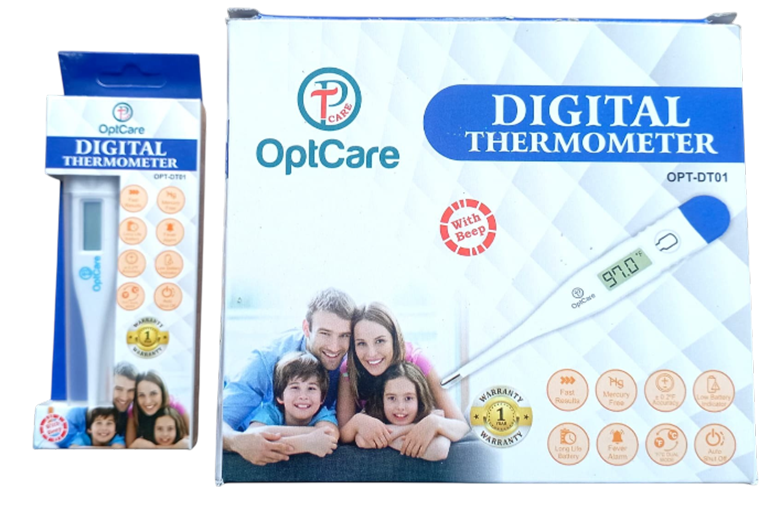
For households comparing available products, OptCare lists a digital thermometer among its healthcare supplies. Ask for the model’s instructions, measurement sites, cleaning directions, and specifications before use. The correct technique matters more than a product’s advertised speed.
Healthcare & Hygiene Products Supplier India
- A helpful habit is to keep the instruction leaflet near your thermometer. If different family members use the device, show them where the sensor belongs and how to change units. Consistent steps make recorded temperatures easier to explain during a medical consultation later.
When Should You Seek Medical Advice?
A thermometer provides one piece of information. Symptoms, age, ongoing medical conditions, and changes in behaviour also matter. Seek urgent medical care for breathing difficulty, confusion, seizures, severe dehydration, or other serious symptoms, even if the displayed temperature seems normal.
For a baby younger than three months, a temperature of 38°C (100.4°F) or higher requires prompt medical assessment. Ask a clinician which measuring method to use for your child’s age. Seek advice for persistent fever, worsening illness, or any result that concerns you. Do not delay care just to obtain another digital thermometer reading.
Frequently Asked Questions
Conclusion
Understanding temperature displays is useful, but a dependable result also requires correct placement, preparation, and cleaning. A digital thermometer reading is most helpful when you record the measurement site and consider symptoms alongside the number. If someone looks seriously unwell, seek medical advice rather than relying only on the display.