What Are Underpads? Uses, Benefits and Types Explained
A wet mattress, damp chair or unexpected leak can make everyday care harder for both the person receiving support and the caregiver. Underpads offer a simple way to protect surfaces and make cleanups easier. They are useful in homes, hospitals and care facilities, especially when someone has bladder leakage or needs help with personal care. This guide explains Underpads uses and benefits, the main product options and practical ways to use them safely.
What Are Underpads and How Do They Work?
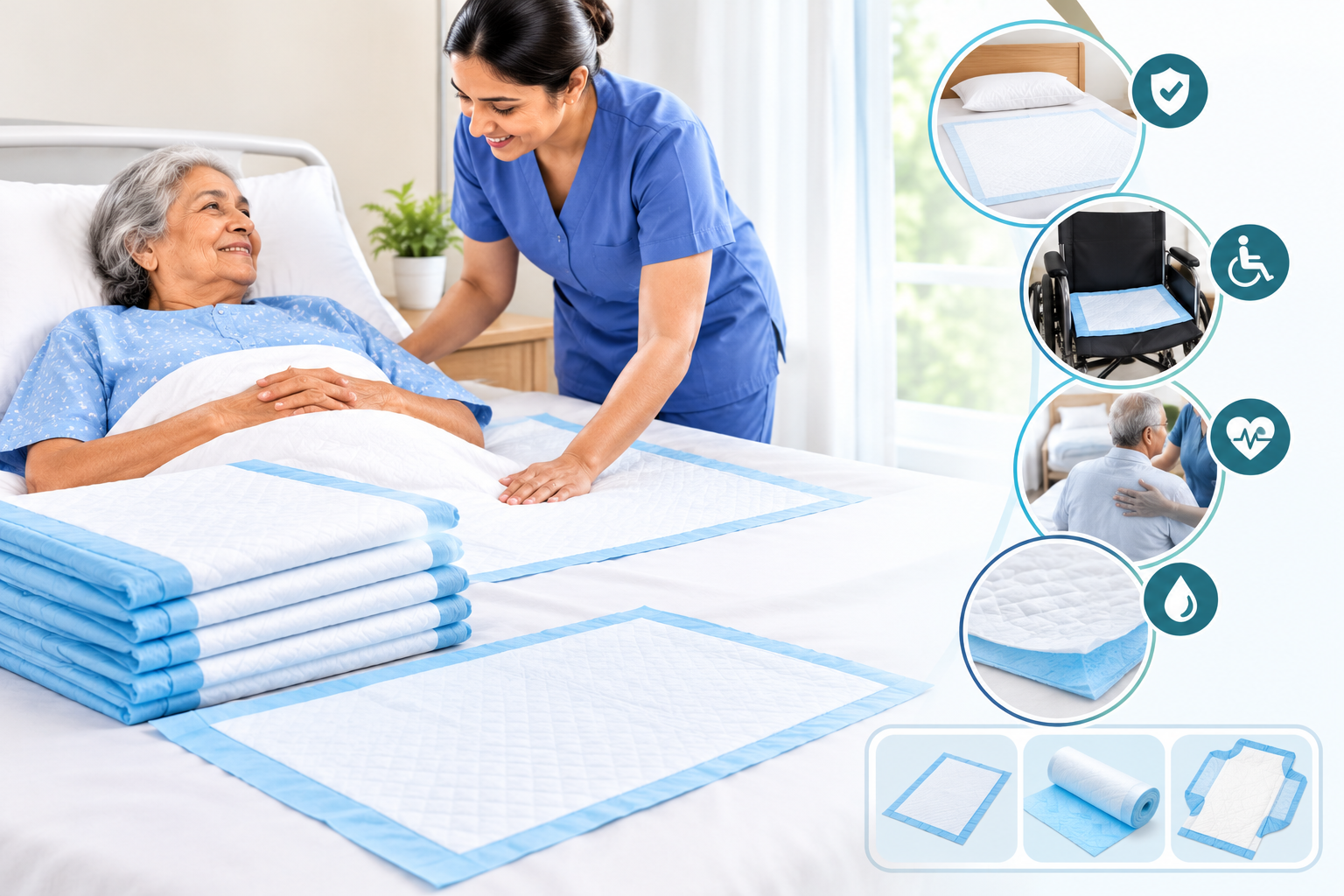
An underpad is a flat protective sheet placed on a bed, chair or other suitable surface. Most designs have a soft upper layer that lets liquid pass through, an absorbent middle section and a backing that helps keep moisture from reaching the surface underneath.
Unlike a wearable diaper, an underpad stays beneath the person. It helps manage occasional leaks or adds protection during care tasks. Its absorbency varies by product, so a pad made for light spills may not manage heavier leakage.
What Are Underpads Used For in Daily Care?
People often ask, what are underpads used for beyond protecting mattresses? Their uses depend on the setting and the person’s needs.
- Nighttime protection: Place one over a fitted sheet where leakage is most likely to occur.
- Seat Protection: Use a suitable cushion or cover for people who sit for long periods.
- Personal care: Protect the bed during diaper changes, washing or dressing changes when appropriate.
- Recovery support: Reduce laundry after accidental spills during home recovery.
- Travel: Carry a disposable pad to protect a temporary resting surface.
- Care facilities: Help staff manage bedding changes and maintain a cleaner care area.
For heavy leakage, an underpad may be used alongside a correctly fitted incontinence product. It should not be treated as a replacement for regular changing or personal hygiene.
Types of Underpads: Which One Fits Your Needs?
Knowing the types of underpads makes shopping easier. The main choices are disposable and reusable designs, with different sizes and absorbency levels within each group.
Disposable Underpads
These pads are intended for one use and are thrown away after becoming wet or soiled. Adult disposable underpads are handy for travel, temporary care, clinics, and places without easy access to laundry. Check the packaging for size, absorbency and disposal instructions. Never wash a product that is labelled single use.
Reusable Underpads
Washable pads are designed for repeated use according to the manufacturer’s care instructions. They may suit households that use several pads every day and have access to suitable washing and drying facilities. Check how many washing cycles the product is designed to withstand and whether its protective backing remains effective.
Different Sizes and Absorbency Levels
Smaller pads may protect a chair or a limited area of bedding, while larger sizes provide wider coverage. A bigger pad is not automatically more absorbent. Compare the stated capacity, layer construction and intended use rather than judging protection by dimensions alone.
Benefits of Using Underpads for Everyday Comfort
The main benefits of using underpads relate to surface protection, easier cleaning and more manageable care routines.
- Protects bedding: The backing helps limit moisture reaching mattresses, cushions and furniture.
- Simplifies cleanup: A wet disposable pad can be removed without changing every bedding layer when the rest remains clean.
- Supports dignity: A prepared resting area can make accidental leaks less disruptive.
- Adds flexibility: Pads can be used on suitable beds and seats at home or during travel.
- Helps caregivers: Keeping spare pads nearby makes routine changes more organized.
These advantages are practical, not medical treatments. Underpads cannot prevent urinary infections, cure incontinence or guarantee freedom from skin irritation. Good skin care remains essential.
Underpads Uses and Benefits for Different Care Needs
Underpads for elderly people can be useful when reaching the bathroom takes longer, movement is limited or occasional leaks occur during sleep. Caregivers should ask about comfort and preferences instead of assuming every older adult needs them.
Underpads for bedridden patients may help protect sheets during rest and assisted care. However, a damp or wrinkled pad can add discomfort. People who cannot change position independently also need an individual skin and pressure care plan from their healthcare team. Adding absorbent layers does not replace repositioning or pressure-relieving equipment.
Adult incontinence underpads are also helpful during short-term recovery, provided their use matches the person’s leakage pattern and care instructions.
What to Check Before Buying an Underpad
Understanding Underpads uses and benefits is only part of making a sensible purchase. Check the following details before buying larger quantities.
- Coverage: Measure the bed or chair area that needs protection.
- Absorbency: Match the product to expected leakage rather than the longest advertising claim.
- Surface feel: Look for a soft top layer without rough edges or irritating folds.
- Backing: Confirm that the underside is designed to resist liquid passing through.
- Practicality: Consider storage space, package quantity, laundering needs and disposal.
- Instructions: Review intended use, storage guidance and any warnings.
OptCare lists a single-use premium underpad measuring 60 × 90 cm, with a multilayer design and absorbent core. Its product page describes use in homecare, hospitals and travel. Check current packaging and specifications before ordering because product details can change.
How to Place and Change Underpads Correctly
A correctly positioned pad works better than one folded or sliding out of place. These steps can help:
- Start with a clean, dry bed or seat.
- Spread the pad flat with the soft absorbent side facing upward.
- Center it under the area most likely to become wet.
- Keep edges smooth and avoid thick folds under the body.
- Keep the pad clean and replace it whenever it becomes wet or damaged.
- Clean and dry the skin gently as part of the person’s usual care routine.
Do not pull or lift someone using an ordinary underpad unless it is specifically designed and rated for patient handling. Ask for assistance with transfers when needed.
Common Mistakes to Avoid
Even useful bed protection sheets and urine absorbent pads can cause problems if used carelessly.
- Leaving a wet pad in place because the mattress still feels dry.
- Placing the waterproof backing against the skin.
- Using several thick layers that bunch up beneath the person.
- Assuming a pad prevents pressure injuries or skin problems.
- Buying without checking size, absorbency or washing instructions.
- Ignoring new or worsening bladder leakage instead of seeking advice.
Persistent redness, broken skin or painful irritation deserves attention from a healthcare professional. Sudden urinary symptoms, fever or blood in urine also need medical assessment.
Conclusion: Choosing the Right Underpad
A suitable underpad can protect furniture, reduce cleanup and make personal care more manageable. The best option depends on expected leakage, available laundry facilities, surface size and the person’s comfort. Remember that Underpads uses and benefits are mostly about practical protection. Regular checks, gentle cleansing and timely changes are just as important as the product itself.
Frequently Asked Questions