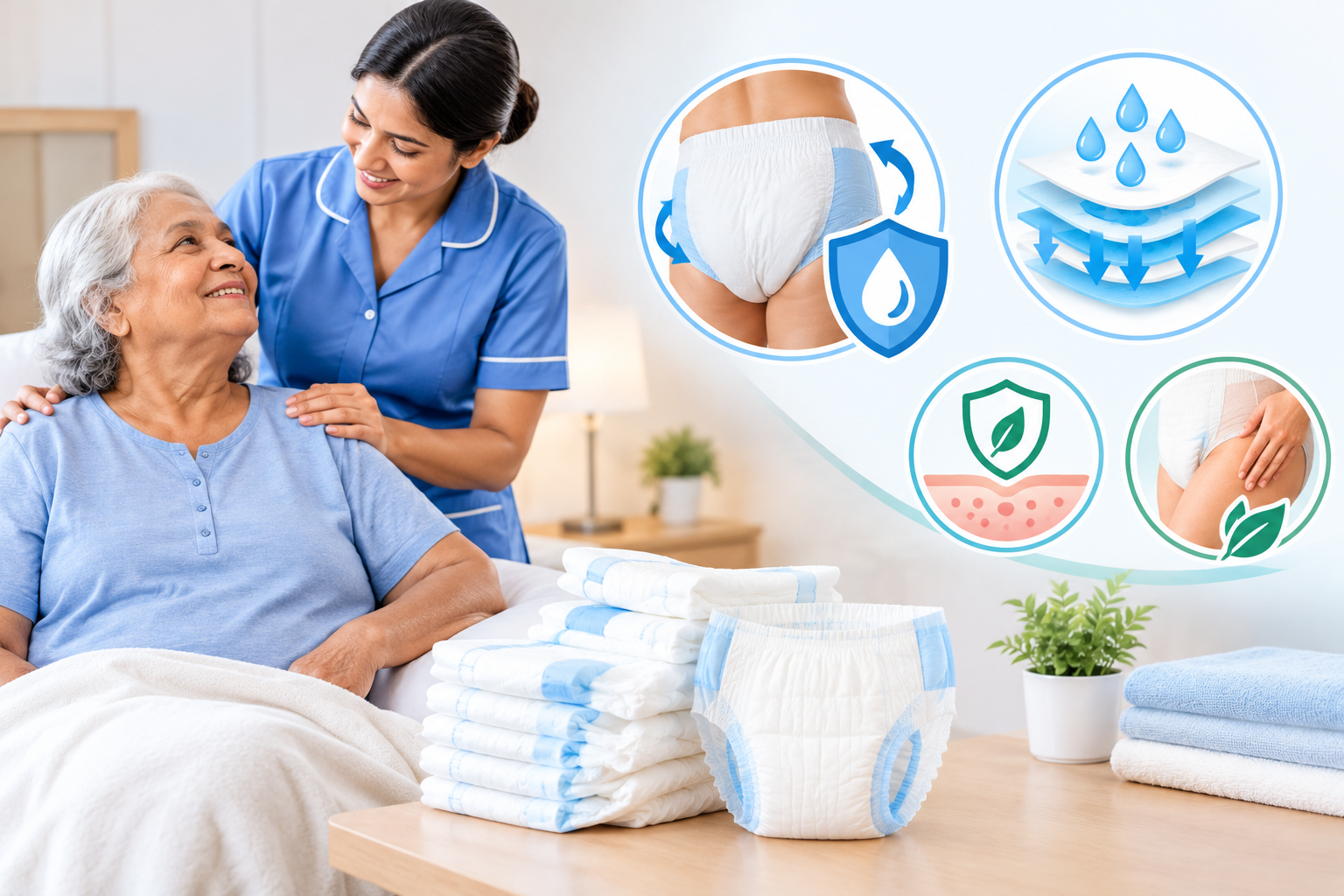
How to Prevent Leakage and Skin Irritation When Using Adult Diapers
Adult diapers provide essential support for individuals experiencing urinary or bowel incontinence, helping them manage personal hygiene and everyday activities. Choosing the right diaper is important, but proper fitting, timely changes and gentle skin care are equally necessary. Understanding how moisture, friction and prolonged contact with wetness affect the skin can help reduce leakage, prevent irritation and maintain comfort throughout the day.
What Causes Adult Diaper Leakage and Skin Irritation?
Adult diapers may leak when they become too full, fit poorly or leave gaps around the thighs. Changes in sleeping position can also affect their fit. Understanding how to prevent adult diaper leakage starts with choosing the right size, checking absorbency levels and following a proper changing routine.
Skin irritation often develops when urine, stool or sweat remains against the skin for too long. Tight waistbands, repeated friction and harsh cleansing products can increase discomfort. Regular skin checks, gentle cleaning and timely diaper changes help reduce redness and protect sensitive skin.
5 Tips to Prevent Leakage from Adult Diapers
A secure fit and the right changing routine work together. Before switching products, check these five details to find out why leaks happen and what can be improved.
- Measure before choosing a size: Check the waist or hip measurement against the product’s size chart, loose leg openings and overly tight bands can both cause problems. Recheck measurements after major weight changes.
- Position the diaper correctly: Centre the absorbent section between the legs, smooth out folds and check that the protective cuffs sit outward rather than tucked inside. Flatten the waistband across the hips.
- Fasten without pulling tightly: For tape-style diapers, secure both sides evenly the waistband should stay in place while allowing comfortable sitting, turning and breathing. Recheck placement after helping someone turn.
- Match absorbency to daily needs: Consider the amount and frequency of leakage, especially overnight. Heavy wetting may need higher absorbency instead of an unnecessarily larger size. Note usual wetting times when planning.
- Check for wetness regularly: Change a wet product promptly and always after bowel soiling do not rely only on a manufacturer’s stated maximum absorption time. Set reminders if checks are easily missed.
Choosing the Right Adult Diaper for Better Leakage Protection
Choosing the right adult diaper depends on the person’s mobility, level of incontinence and daily care needs. Tape-style diapers are suitable for individuals with limited mobility or those who need caregiver assistance, as the adjustable fasteners make changing easier. Pull-up diapers are more convenient for people who can walk and manage their personal hygiene independently.
Understanding how to prevent adult diaper leakage also involves checking the correct size, absorbency level, waist fit and leg coverage. A well-fitted diaper helps reduce gaps, supports comfortable movement and provides better protection during daily activities and sleep.
Build a Changing Routine That Works
Check the diaper at regular intervals and after suspected wetting. People with heavier leakage may need more frequent changes than others. Keep spare products, clean clothing and gentle cleansing supplies within easy reach so care is not delayed during the day.
At night, choose absorbency suited to the person’s usual pattern and assess the product in the morning. A wet or soiled diaper should not remain against the skin simply because its packaging mentions extended protection. Adjust the routine when needs change.
How to Prevent Skin Irritation When Wearing Adult Diapers
Healthy skin needs gentle cleaning, careful drying and protection from moisture. The following steps can help reduce irritation, particularly for older adults and people who spend long periods sitting or lying down.
- Clean after each episode: Remove urine or stool with lukewarm water or a mild, soap-free cleanser; avoid vigorous wiping that can damage delicate skin. Choose sensitive-skin wipes when water is unavailable.
- Dry by patting gently: Use a clean, soft towel and pay attention to skin folds; placing on a fresh diaper over damp skin can worsen rubbing. Allow brief air drying when practical.
- Consider a barrier product: A suitable zinc oxide or petrolatum-based cream can shield vulnerable areas; ask a healthcare professional which product fits the person’s skin needs. Apply sparingly, following the product instructions.
- Avoid irritating products: Skip strongly scented soaps, alcohol-based wipes and talcum powder; these can dry the skin or increase discomfort during repeated changes. Prefer fragrance-free products made for sensitive skin.
- Look for early warning signs: Check the groin, buttocks and upper thighs for redness, soreness or broken skin; persistent changes need clinical advice rather than repeated home remedies. Swelling or discharge also needs prompt attention.
Adult Diaper Features That Help Reduce Leakage
Choosing the best adult diapers for leakage protection involves checking features that support absorbency, skin comfort and a secure fit. Look for a highly absorbent core that helps manage moisture, soft inner materials that reduce friction and flexible leg cuffs that help prevent leaks during movement.
Breathable outer layers can improve airflow and reduce moisture buildup, while wetness indicators, where available, help caregivers identify when a change may be needed. Consider the person’s level of incontinence, mobility and daily routine before selecting a product. A suitable adult diaper should provide comfortable coverage while sitting, walking, lying down or sleeping, without causing excessive pressure around the waist or thighs.
How to Reduce Adult Diaper Leakage at Night
Wet bedding after sleep may point to an overloaded diaper, a poor fit around the legs or a change in sleeping position. Check these causes before automatically moving to a larger size. A different absorbency level or design may work better.
Place an absorbent underpad on the mattress for added bedding protection, but continue using a correctly fitted diaper. An underpad cannot replace timely changing or gentle skin care. If a person cannot reposition independently, caregivers should also check pressure-prone areas.
When to Seek Medical Advice for Adult Diaper Leakage and Skin Irritation
Frequent adult diaper leakage or ongoing skin irritation may indicate an underlying health concern that needs medical attention. Sudden changes in bladder control, painful urination, fever, blood in the urine or persistent redness should not be ignored. Understanding how to prevent adult diaper leakage also involves identifying possible causes, such as urinary tract infections, changes in bladder function or certain medications.
A healthcare professional can assess symptoms and recommend suitable care based on individual needs. Caregivers should also avoid restricting water intake without medical advice, as dehydration may lead to additional health problems. If skin irritation continues despite regular diaper changes and proper hygiene, a medical evaluation can help identify the cause and prevent further complications.
Better Comfort Through Care
Understanding how to prevent adult diaper leakage begins with choosing the right size, checking absorbency levels, following a regular changing routine and maintaining gentle skin hygiene. These simple care practices can help reduce discomfort, protect sensitive skin and support daily confidence. OptCare offers adult diapers designed for different incontinence care needs. Explore the available options to find suitable products that support comfort, hygiene and everyday care.
Frequently Asked Questions